Downlink commands are supported by the following operations:
-
Manually sending downlink commands via the Console.
-
You can send whatever command you want.
-
You must know the command/port info to send.
-
-
Using the commands we’ve added to the device Template.
-
Users can adjust these settings themselves by simply going to the Settings screen for their device.
-
Only certain supported commands have been added. In order for commands to be supported they must be added into the Device Template being used.
-
-
Directly via your myDevices LNS Instance
-
Requires that we set up a private LNS instance for you first.
-
You can send whatever command you want.
-
You must know the command/port info to send.
-
Sending downlink command from the Console
Sending downlink commands can be done from the Console > Device Registry screen.
-
Log into the Console and go to the Device Registry screen.
-
Use the search fields to find the devices you want to send the commands to.
-
You can use the individual search fields or you can use the Bulk search option.
-
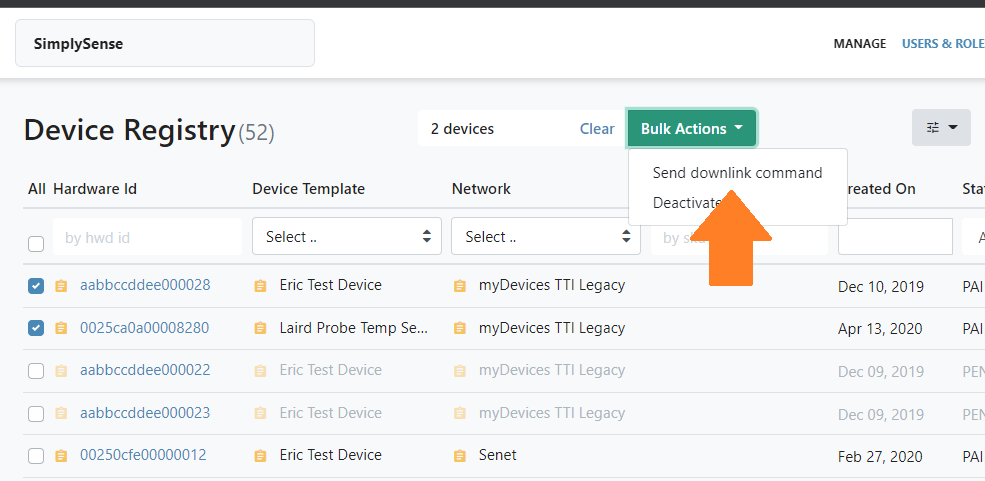
Either way, make sure the devices you want to send the command to are selected.
-
-
Expands the Bulk Actions and select Send downlink command.
-
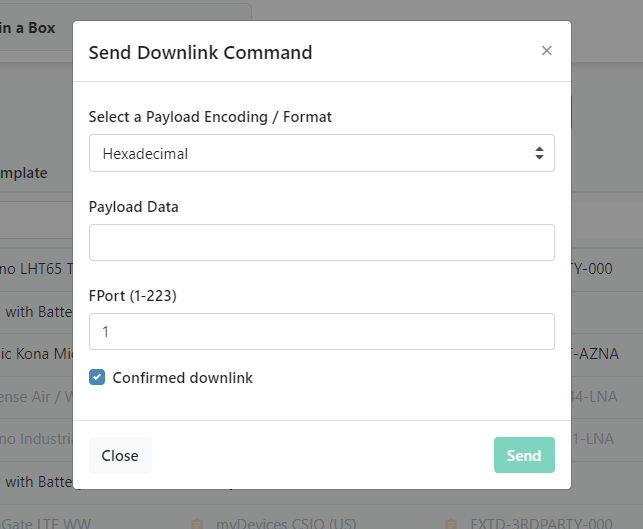
In the dialog that follows, you can enter the downlink command and port information and send the payload to the selected devices.
Sending downlink commands from Device Settings
This feature requires downlink support by the hardware as well as a template in our system which defines what intervals are allowed. If you do not see an option to adjust interval on the device’s settings tab, please contact support.
Sensors are designed to run for extended periods at their default intervals - adjusting intervals to very frequent values can negatively affect battery longevity and may affect RMA replacement.
Adjust sensor Reading Intervals
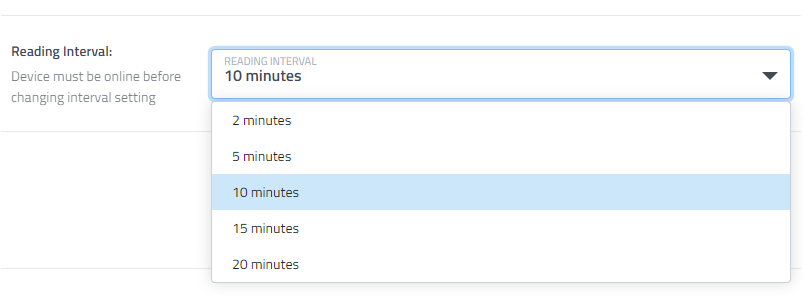
Many sensors transmit on a fixed interval, like every 20 minutes, or once an hour. For these sensors their Reading Interval (how often a new reading is transmitted) can be adjusted from the device's Settings tab.
-
From the Manage screen, click or tap on the device you want to adjust the Reading Interval for.
-
Go to the Settings sub-screen.
-
Change the interval option to reflect how often you want the device to send readings.
-
Click the green Save button to save your change.
-
Sensors must be online and transmitting regularly for downlink commands to be successfully sent to the sensor. You cannot change the interval of an offline sensor, as we cannot communicate with it.
-
For most sensors (LoRa Class A - generally battery powered) the change will take effect when the sensor sends its next uplink. It may therefore take some time for the sensor to acknowledge and transition to the new setting. For example, a sensor on a 1-hour interval may not ‘hear’ the request to change its interval for up to 1 hour.
For LoRa Class C sensors (generally AC powered), they are always listening and should accept the command within seconds.
Adjusting the Reading Interval for multiple sensors at once
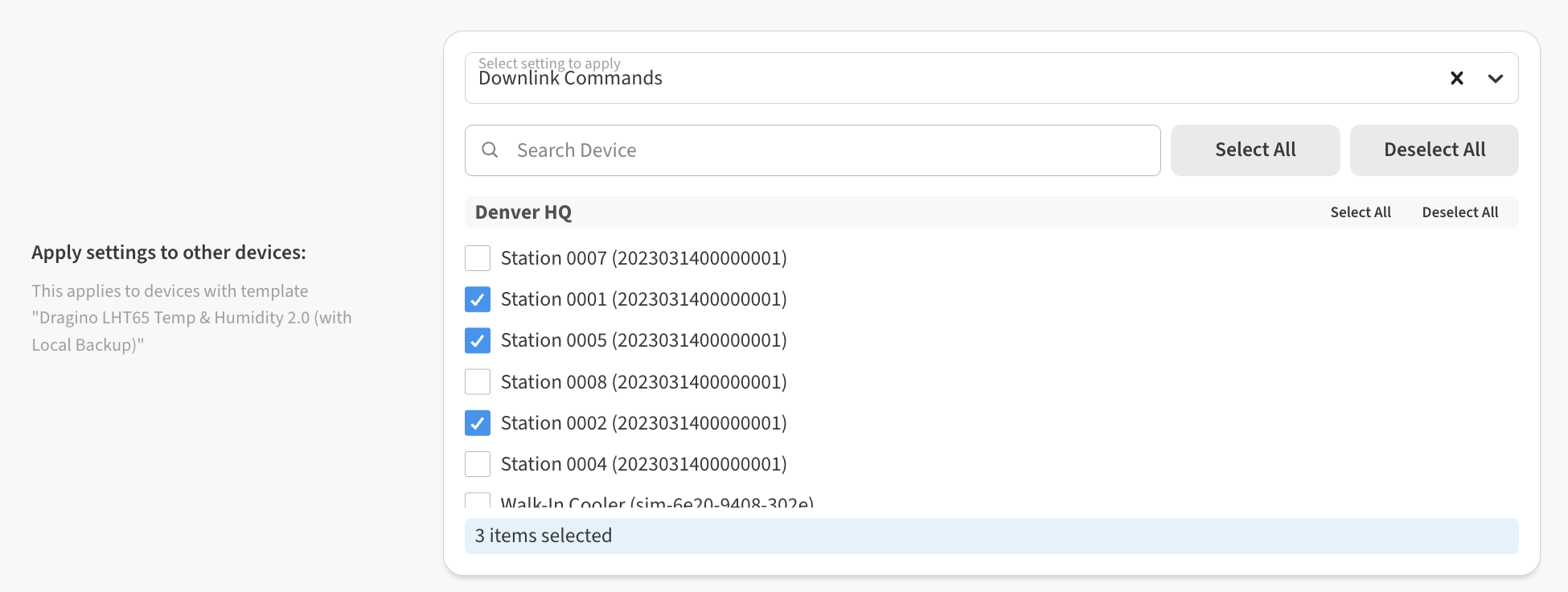
You can adjust the Reading Interval multiple sensors at once by using the Apply Settings to Other Devices option.
-
On the Settings tab, adjust the Reading Interval for one of the sensors
-
In the the Apply Settings to Other Devices area, choose Downlink Commands and then select the checkboxes for the devices you’d like to apply the same Reading Interval to.
-
Finally, Save your changes with the green Save button in the lower-right.
Sending downlink commands via myDevices LNS (Chirpstack)
-
Log into your myDevices LNS instance: https://lns.mydevices.com/#/login
-
Search the device’s DevEUI in the search box at the top of the page.
-
Click the DevEUI from the search results to go to the device’s page.
-
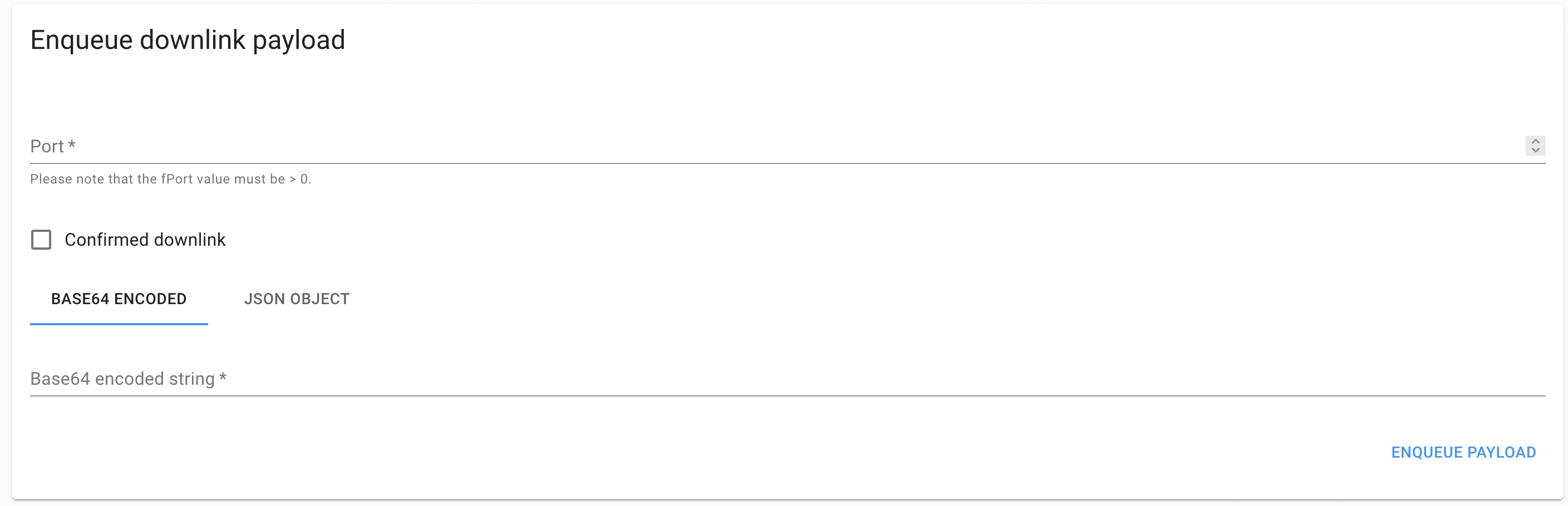
On the Details tab, scroll down to the Enqueue Downlink Payload area:
-
In the Port field, enter the port number to send the downlink command on.
-
Check the box to send a confirmed downlink command
-
In the Base64 encoded String field, enter a Base64-encoded downlink payload
-
Click Enqueue Payload to send the payload to the device. Please note that most devices will not pick up the Enqueued Payload until their next check-in.